
School Gym Equipment: The Small Tools That Make a Big Difference

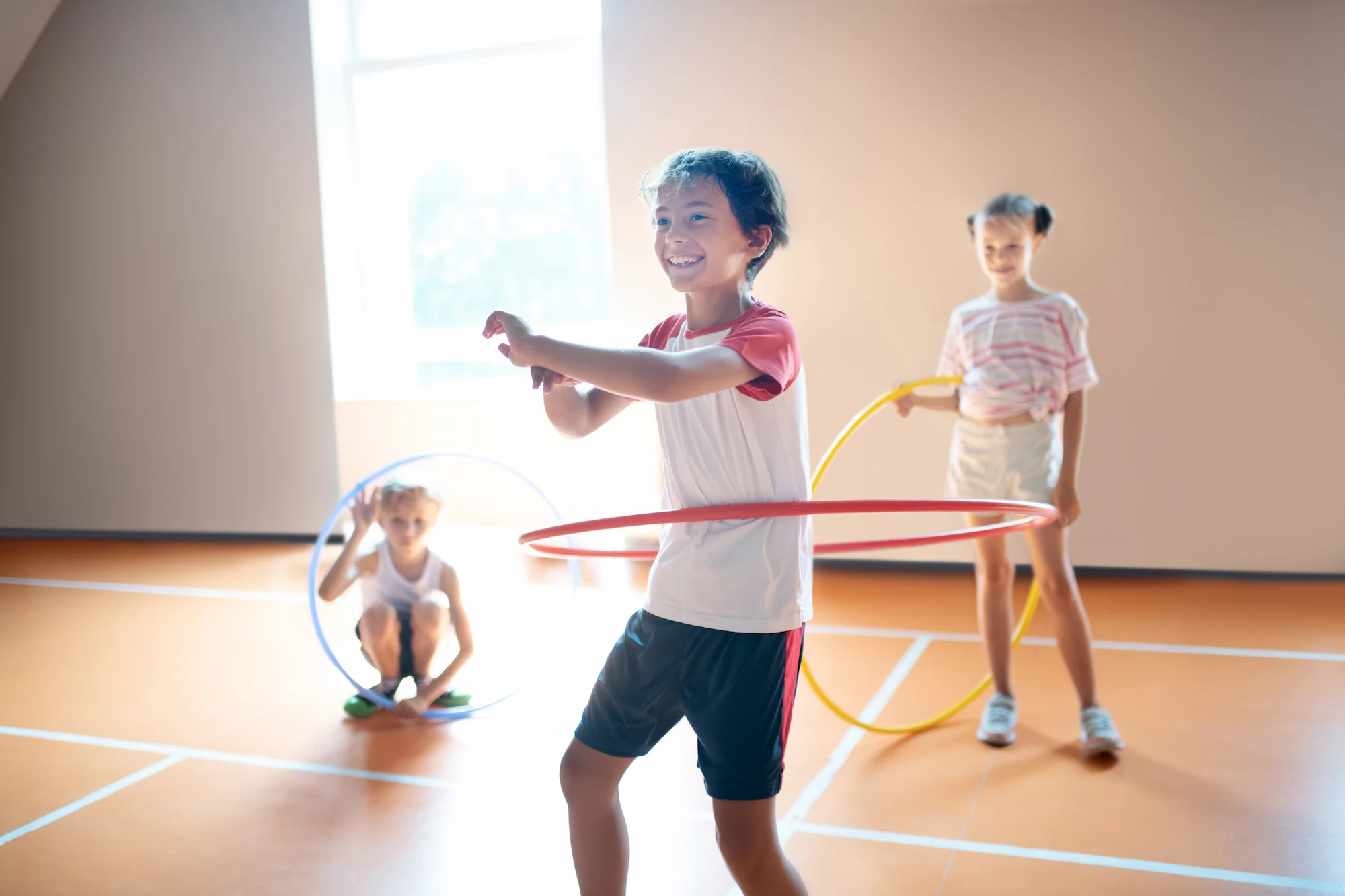
Physical education is a fundamental part of the school curriculum, as it contributes not only to motor development, but also to students’ cognitive and social growth. However, schools don’t always have adequate spaces and tools to make motor activities truly effective and engaging. Often, attention is focused on fixed equipment, such as wall bars and benches, neglecting the crucial role of small school gym tools.
Simple tools such as hoops, cones, elastic bands, and modular obstacle courses can completely transform a physical education lesson by offering variety in exercises, stimulating coordination, and improving student engagement. The use of versatile materials allows teachers to customise activities based on the age group and motor skills of their students.
The importance of proper equipment in physical education
Motor activity is not just a recreational moment for students but a key component of their psychophysical development. A well-equipped environment helps improve:
✓ Coordination and agility → Through targeted exercises using small equipment, such as obstacle courses and hoop jumps.
✓ Strength and endurance → Using elastic bands and ropes promotes progressive and safe muscle development.
✓ Balance and posture → Items like mats and unstable platforms help children improve body stability.
✓ Collaboration and socialisation → Team games and motor circuits foster group work and rule-sharing.
A well-equipped school gym supports more effective motor learning, making PE lessons a more dynamic and engaging experience for students.
Small school gym tools: which ones are essential?
In addition to fixed structures like benches and wall bars, schools should invest in lightweight and easy-to-use gym tools.
Here are the must-have small gym tools for any school:
✓ Hoops and cones → Perfect for coordination, speed, and agility exercises. They can be used in motor circuits, balance games, and play-based activities.
✓ Sensory and soft balls → Essential for team games and motor activities, helping to develop grip strength and reflexes.
✓ Elastic bands and ropes → Ideal for resistance training, improving coordination without the risk of overloading.
✓ Modular obstacle courses → Create dynamic environments that encourage movement and adaptability, improving balance, strength, and responsiveness.
✓ Mats and platforms → Essential for safety and comfort during floor-based activities, helping students perform exercises more confidently.
The combined use of these tools makes it possible to create varied and engaging lessons, adaptable to the needs of every student group.
Physical Education Equipment: Differences Between Fixed and Mobile Tools
When setting up a school gym, it is essential to consider the type of equipment to integrate, evaluating the benefits of both fixed and mobile tools. Both play an important role in physical education but differ significantly in terms of use, versatility, and space requirements.
Fixed Equipment: Stability and Strength
Fixed equipment is designed to be permanently installed in the gym and offers the advantage of being durable and safe.
✓ Wall bars and pull-up bars → Used for strength, coordination, and stretching exercises.
✓ Gym benches → Ideal for balance activities, jumps, and training combined with other tools.
✓ Basketball hoops and football goals → Essential for developing sports skills and teamwork.
Advantages of fixed equipment:
- Greater durability and long-term resistance.
- Ideal for specific exercises focused on strength and posture.
- Provide stable reference points for motor activities.
Mobile Equipment: Versatility and Adaptability
As mentioned, mobile tools are lighter and easy to transport, making them perfect for dynamic activities and group games.
✓ Hoops and cones → Can be arranged in different layouts for speed and coordination training.
✓ Balls of various types → Support the learning of different sports and improve grip and reaction skills.
Benefits of Mobile Equipment:
- Greater flexibility in organizing lessons.
- Easy to transport and store, ideal for gyms with limited space.
- Possibility to create diverse motor circuits tailored to all age groups.
How to Make Physical Education Lessons More Engaging
Physical education shouldn’t be monotonous or repetitive. To keep students engaged and motivated, it’s essential to offer varied and adaptable activities. Small school gym tools offer countless possibilities for use, turning each lesson into an opportunity for active learning.
1. Team Games and Playful Activities
Team games not only support physical development but also improve students’ ability to collaborate, follow rules, and interact with others in a fun and inclusive setting. Using lightweight equipment like balls, hoops, and cones helps stimulate multiple motor skills, adapting the intensity and difficulty to the age and abilities of the children.
✓ Relays and obstacle courses → Speed and coordination games are ideal for enhancing responsiveness and movement control. They can be set up using cones, mats, and small obstacles to be overcome in different ways (jumps, slaloms, sprints). These activities help develop endurance and the ability to perform quick and precise movements.
✓ Ball games → Throwing, catching, and passing balls of different sizes and weights improves manual dexterity and concentration. Games like “poison ball” or “quick pass” sharpen reflexes and enhance hand-eye coordination. These activities are also useful for teaching teamwork and spatial awareness.
✓ Balance challenges with mats and platforms → Using unstable mats, lines drawn on the floor, or small obstacles to cross helps improve static and dynamic balance. These exercises allow children to gain body awareness and correct posture—fundamental elements for motor development.
Team games can also be adapted to include cognitive elements, such as inserting questions to answer between exercises or creating cooperative challenges where children must find a shared solution to complete the course.
2. Custom Motor Skill Circuitsi
Every child has different learning paces and styles, and custom motor skill circuits are an effective tool for developing fundamental movement patterns such as running, jumping, climbing, and coordination. The adaptability of these circuits allows for the active involvement of all students, ensuring a stimulating and inclusive physical activity.
✓ Progressive difficulty circuits → Structuring the course in progressive levels helps children gradually improve their endurance and motor skills. For example, you can start with jumps between ground hoops, then add hurdles or balance beams. The goal is to increase movement safety, while improving agility and coordination.
✓ Themed stations → Each station can focus on a specific aspect of motor development:
- Balance station → With unstable platforms or walking lines.
- Speed station → With cones or slalom routes.
- Strength station → With pulling exercises or lifting light objects.
This breakdown makes it possible to work on different motor skills in a targeted way, making each exercise more engaging.
✓ Combined training → Alternating individual and group activities allows children to develop both their motor independence and teamwork skills. A great example is the paired run with a link (where children move while holding hands or tying their legs with a soft band), which helps improve movement synchronization and cooperation.
Integrating lightweight tools such as hoops, balls, jump ropes, and mats makes the circuit even more dynamic, allowing students to explore different types of movement and improve their motor skills progressively and enjoyably.
Investing in School Equipment for a More Functional Gym
A well-organized sports environment is essential to ensure safety, engagement, and motor development for students. When supported by the right equipment, physical education becomes a true opportunity to develop key skills, such as coordination, balance, and endurance.
Choosing the right equipment for the school gym not only enhances lessons but also helps create a dynamic and stimulating space, where every child can express their full potential.
Now you just need to rethink your gym with practical, safe and engaging solutions: discover our school PE equipment section and choose the tools that best suit your students’ needs!
