
Please note: the minimum order amount is €350.
Complete Guide to Road Safety Education for Children: Tips and Resources

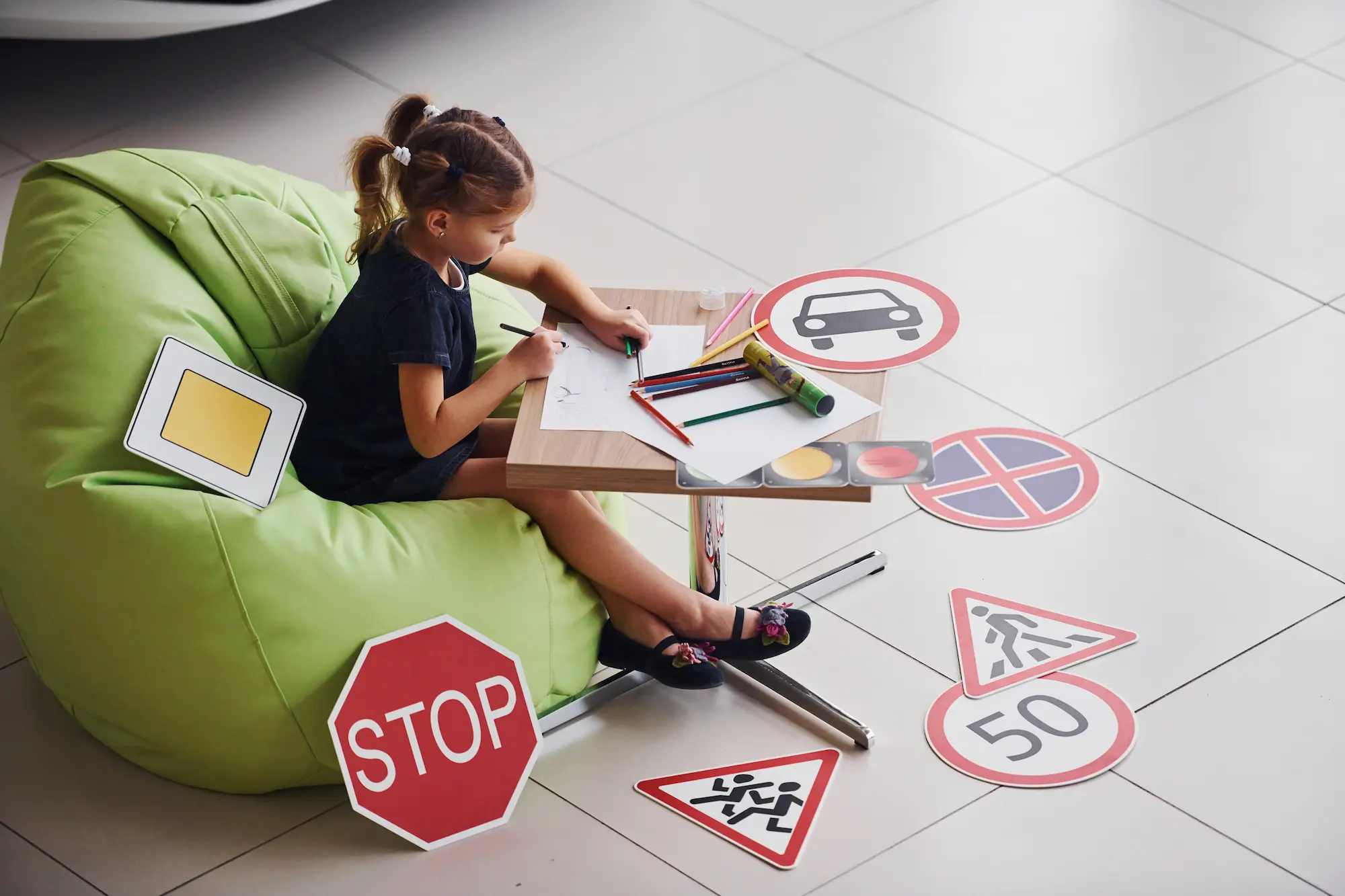
Every day, millions of children walk along roads, often to go to school, visit friends or head home. But how many of them really know the rules of the road? Road safety education for children is essential to help them grow up with greater awareness of themselves and others.
Through educational paths, interactive activities and didactic materials, it is possible to teach road rules in a more engaging and effective way. A child who understands the importance of pedestrian crossings, traffic lights and road signs will behave more consciously and safely in everyday situations.
But how can we promote effective road safety learning? What are the best ways to help children understand the value of road rules? Let’s explore the best educational paths and didactic materials to transform this teaching into an engaging and practical learning experience.
Why is it important to teach road safety to children?
Many accidents involve pedestrians, cyclists and inexperienced drivers. Teaching road safety to children does not only mean avoiding immediate dangers, but building awareness that will guide them for life. A well-structured road safety education:
✔ Increases personal safety — A child who knows how to behave on sidewalks or cycle lanes is less exposed to risks.
✔ Develops autonomy in daily movements — Learning to move independently helps children gain confidence in the home-to-school journey and everyday activities.
✔ Encourages rule-following — Knowing and applying road rules helps children understand the importance of respecting rules, a valuable skill in all aspects of life.
✔ Stimulates a sense of responsibility — Teaching children about road safety means making them aware and respectful of other road users.
Road safety education is not just a school subject, but a life skill that influences everyday behaviour, helping children move safely, foresee dangers and act responsibly.
Road safety education program for primary school
To ensure effective learning, road safety education activities should be engaging and hands-on. Here are some ideas to create a structured educational path, suitable for primary school:
1. Simulated pedestrian path
A key activity for teaching children how to cross the road safely. In a school setting or outdoor space, you can recreate pedestrian crossings, traffic lights and road signs, allowing children to practice safe behaviour.
- Objective: teach the importance of pedestrian crossings, road signs and safe walking in traffic.
- Materials needed: adhesive stripes and educational mats with crossings and road signs.
- Activity: children can play the role of drivers, while others cross the road following signals and safety rules.
2. The traffic light game
A classic road safety game, perfect for teaching children the meaning of traffic light colours and the importance of waiting times.
-
Objective: help children understand when to stop, get ready, and cross safely.
-
Materials needed: coloured cardboard or traffic light props, whistles for the instructor.
-
Activity: one child acts as a traffic light, showing colours and inviting classmates to move only when the light turns green.
3. Safe crossings
Children often underestimate the importance of looking both ways before crossing. In this activity, an intersection is recreated and children are asked to simulate crossing situations with and without distractions (e.g., using a toy phone or talking to a friend).
-
Objective: show the danger of distracted walking.
-
Materials needed: educational carpets, signs, cones and other accessories.
-
Activity: the class is divided into two groups: one crosses distractedly, the other observes and notes down mistakes and correct behaviours.
Educational Materials for Road Safety: Essential Tools
To make road safety education activities more engaging and practical, it’s essential to use adequate didactic materials that can capture children’s attention and support learning. A combination of visual tools, interactive routes and educational games helps transform abstract concepts into concrete experiences.
Here are some essential tools for teaching road safety effectively:
✓ Educational mats with road layouts → Simulate real roads with horizontal and vertical signage, allowing children to practice in realistic scenarios.
✓ Didactic traffic signs → Reproduce the most common road signs and help children become familiar with their meaning.
✓ Illustrated books and interactive worksheets → Support materials that explain rules and behaviours through images and stories.
✓ Model cars, bikes and pedestrians → Useful for simulating traffic situations and explaining interactions between different road users.
✓ Role-playing and quiz games → To reinforce the understanding of road rules in a dynamic and fun way.
Using these materials supports a multisensory approach, which makes learning more effective and long-lasting. In fact, children retain information better when they can see it, touch it and put it into practice through play.
| Tool | Benefits | Application |
|---|---|---|
| Educational mats with road layouts | Realistic simulation of roads and intersections
|
Practical activities on crossing and road signage |
| Didactic traffic signs
|
Familiarization with road signs | Recognition games and guided routes |
| Illustrated books and worksheets
|
Visual reinforcement of road rules
|
In-class learning with stories and images |
| Model cars and pedestrians
|
Understanding interactions between road users | Traffic simulations and real-life situations |
| Quiz and role-playing games
|
Practical reinforcement of knowledge | Group games to test competencies |
How to Engage Children in Learning Road Safety Rules
For road safety education to be effective, it is essential to make children active participants in their own learning. Involving them in games, hands-on experiences and group activities supports better memorization of rules and facilitates their application in everyday life.
1. Role-playing and simulations
- Assign children different roles (pedestrians, drivers, traffic officers) and have them interact in a simulated road environment.
- Use models and signs to recreate real-life situations and explain proper behaviour on the road.
2. Strumenti visivi e interattivi
-
Educational videos and animations to explain the rules clearly and engagingly.
-
Educational apps and digital quizzes to test the knowledge acquired.
3. Group projects and creative workshops
-
Create with the children a poster with the main road rules.
-
Draw traffic signs and create themed routes in class.
-
Work on stories or scenarios where the main characters face road safety challenges.
The goal is to turn the lesson into a practical and engaging experience, allowing children to experiment and apply road rules naturally.
Road Safety Education: An Investment in Children’s Safety
Teaching children road rules is not just an educational duty, but a long-term investment in their safety and independence. Through well-structured educational programs, interactive activities, and the use of appropriate teaching materials, it’s possible to turn road safety education into an engaging and memorable experience.
Raising awareness from an early age helps prevent risky behaviour, reduce accidents and raise future citizens who are more responsible. Schools and families that integrate road safety education into children’s growth paths equip them with the tools they need to move around independently and safely.
Want to discover the best educational tools for road safety? Start with Italveneta’s traffic signs.
