
Please note: the minimum order amount is €350.
How shared spaces influence social relationships

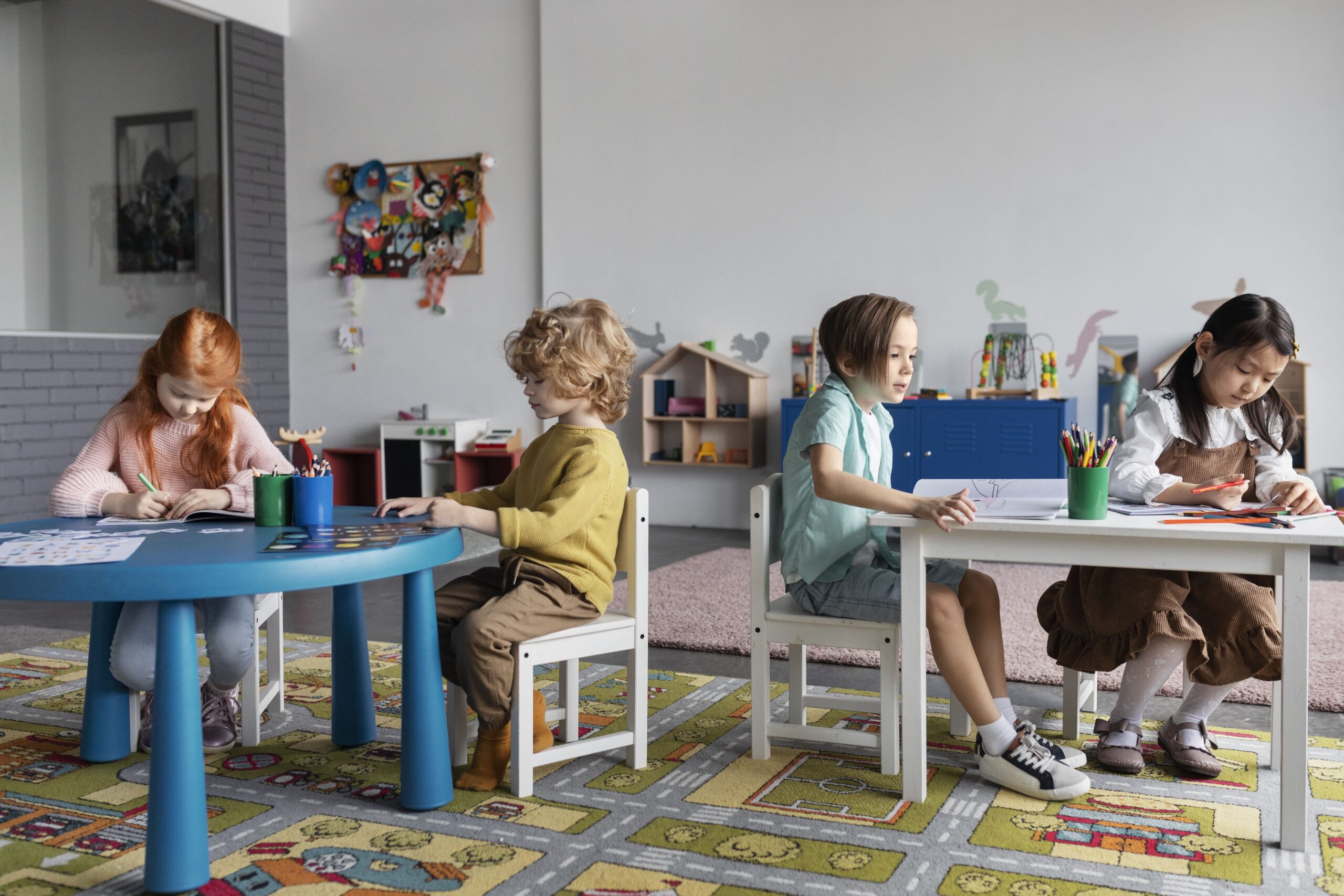
A practical guide for schools, public authorities and education professionals
Index
- Why shared spaces are essential
- The elements that make a shared space truly effective
2.1 Physical layout
2.2 Colours and materials
2.3 Flexibility and modularity - How well-designed shared spaces improve social relationships
- What to consider when choosing furniture and equipment
- Q&A – frequently asked questions
In educational and public environments, shared spaces are not just transition areas: they represent active places for interaction, cooperation and social-emotional development.
For those operating in the b2b sector – educational distributors, designers, school managers and public administrators – investing in well-designed shared spaces means improving everyday wellbeing and increasing the overall quality of the services provided.
1. Why shared spaces are essential
Studies in pedagogy and environmental psychology show how spaces directly influence people’s behaviour. In particular, shared spaces:
- encourage spontaneous and positive interactions
- strengthen the sense of community
- stimulate socialisation and collaboration
- reduce conflicts and disorganised behaviour
For schools, gyms, educational centres and local authorities, these benefits lead to concrete improvements in terms of service quality and user satisfaction.
2. The elements that make a shared space truly effective
2.1 Physical layout
The configuration of furniture and equipment defines dynamics and movement flows:
- clear and well-organised pathways
- differentiated areas for social interaction, play, study or waiting
- accessibility for all age groups
- intelligent use of circulation areas
- safe products compliant with regulations (uni en 71, uni en 1176, uni en 1729)
2.2 Colours and materials
The choice of materials affects the quality of the overall experience. Balanced colour schemes, washable surfaces and durable materials increase comfort and a sense of calm.
2.3 Flessibilità e modularità
Public authorities and schools need adaptable environments. Modular solutions – combinable play elements, psychomotor blocks, durable plastic furniture – make it possible to adapt spaces to:
- educational activities
- socialisation moments
- workshops
- seasonal events
- motor and sensory activities
3. How well-designed shared spaces improve social relationships
Safe, welcoming and adaptable spaces foster positive relationships. The main benefits include:
- greater collaboration
- improved peer-to-peer communication
- reduction of conflicts
- inclusion of children with different needs
- development of autonomy and a sense of responsibility
- increased participation in shared activities
For educational institutions, these aspects have a direct impact on teaching quality, school climate and family satisfaction.
4. What to consider when choosing furniture and equipment
A purchasing manager or distributor should pay attention to:
- european certifications (uni en 71, uni en 1176, uni en 1730)
- durability for intensive use
- safe and easy-to-clean materials
- resistance to external agents for outdoor installations
- modularity for quick space reconfiguration
- availability of spare parts to extend product lifespan
- ergonomic design to promote comfort and inclusion
In the case of solutions produced by companies such as Italveneta Didattica, a lifespan of up to 20 years, colour stability and immediate availability represent key advantages for those planning long-term investments.
Shared spaces are much more than common areas: they are tools for relationships, learning and wellbeing. Investing in a well-structured environment means offering a better, safer and more inclusive service. For this reason, it is essential to choose durable, certified solutions designed for intensive long-term use.
5. Q&A – frequently asked questions
- How can you tell if a shared space is effective?
Observe user behaviour: order, positive interactions, smooth use of space and the absence of conflicts are key indicators.
- Which materials are recommended for high-usage environments?
Certified and durable plastic, modular structures and washable surfaces, especially for schools and sports centres.
- Is certification really that important?
Yes. uni en certifications ensure safety, reliability and compliance with european regulations, reducing risks and institutional liability.
- Is it useful to invest in modular solutions?
Absolutely. They allow spaces to be adapted to different needs without additional long-term costs.
If you are designing or upgrading shared spaces for schools, public authorities or educational centres, we can support you with certified, modular solutions designed to last over time.
Contact us whenever you wish for a dedicated consultation or to receive a tailored quotation.
