
Please note: the minimum order amount is €350.
Innovative School Furniture for the Future: How They Transform Classrooms

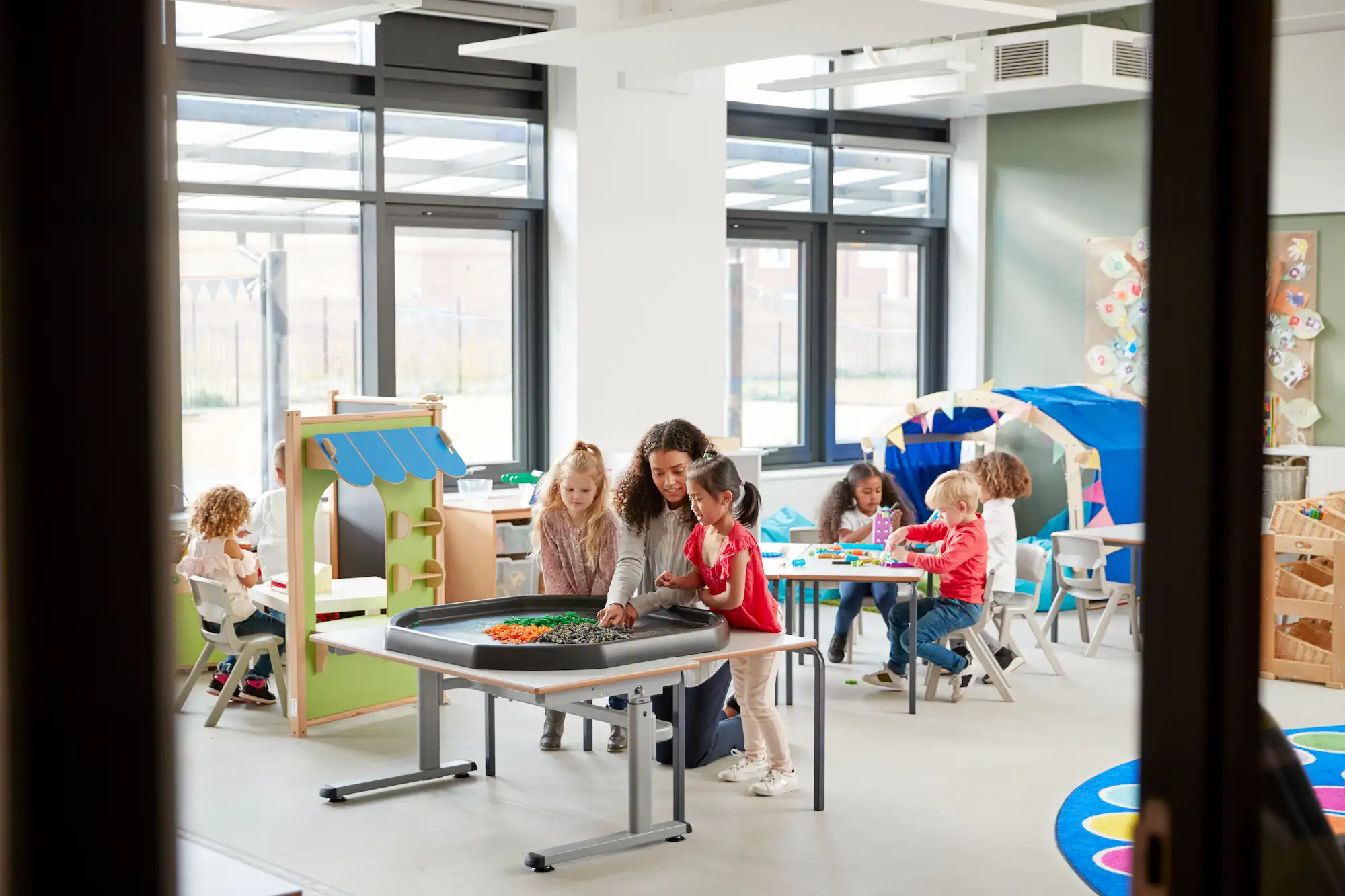
The role of school furniture in learning
The space in which students learn is not secondary to the curriculum. The arrangement of desks, the comfort of seats, and the versatility of furniture directly influence concentration, engagement, and collaboration. A well-designed school environment can enhance the educational experience as much as the teaching method itself.
Every school has different needs: in the early stages of growth, it is essential to have furniture that stimulates movement and creativity, while in higher grades an environment that supports study and group work is required. For this reason, when designing educational spaces, it is necessary to find a balance between traditional, reliable solutions and innovations that improve the quality of teaching without losing their essence.
The debate between innovation and tradition in school furniture is not only about aesthetics or the introduction of advanced technologies, but about creating an environment where students can fully express their potential. The point is not to replace traditional furniture with futuristic elements, but to integrate new solutions consistently with the needs of both learners and teachers.
Innovative school furniture: features and benefits
When we talk about innovative school furniture, we refer to functional solutions designed to make learning more dynamic, comfortable, and inclusive. Educational environments are no longer thought of as static spaces, but as areas that can be reconfigured according to teaching needs.
One of the most relevant aspects is modularity. Modular designs allow classrooms to be transformed quickly: from a traditional setup with orderly rows to group-based arrangements for collaborative or laboratory activities. This flexibility is particularly useful in schools that experiment with teaching methods such as cooperative learning or flipped classrooms.
Another key element is ergonomics. Since students spend many hours seated, it is essential that chairs are designed to support posture and reduce the risk of musculoskeletal problems. Adjustable-height chairs, reclining backrests, and inclined surfaces improve comfort and concentration. Even desks can be adapted to the needs of both children and older students, with tiltable tops and structures that allow them to work either seated or standing.
Finally, technology is increasingly becoming part of school furniture. Desks with interactive surfaces, USB sockets, and adjustable lighting contribute to making classrooms more functional. However, it is important to integrate these technological solutions without overcrowding the space: innovation must serve learning, not become a source of distraction.
Primary school: between innovation and tradition
In primary schools, furniture must respond to specific needs linked to children’s growth and cognitive development. Here, the environment should encourage discovery, play, and social interaction, while ensuring safety and comfort.
Modular tables are particularly useful because they allow different layouts: from the classic frontal arrangement to island groups that stimulate collaboration among pupils. The inclusion of ergonomic chairs with adjustable heights is equally important, as it helps children maintain correct posture and gradually adapt to different stages of growth.
However, innovation should not exclude more traditional solutions, which remain essential for many learning activities. Child-sized libraries, well-structured teacher desks, and stable benches continue to be points of reference in the educational space. The balance between old and new translates into more welcoming environments, where children find clear reference points without giving up the chance to experiment and move freely.
Another important aspect is the division of spaces into functional zones. Alongside the classic areas for frontal teaching, many schools are introducing spaces dedicated to relaxation, reading, and practical activities. These areas, furnished with rugs, cushions, and sensory materials, offer children a diversified environment where they can learn through different approaches.
In conclusion, primary school represents a context where the balance between innovation and tradition is particularly evident: classrooms must be versatile without losing the sense of stability and familiarity that children need to feel safe and supported at the same time.
Innovative school furniture for secondary school: functionality and technology
In secondary schools, furniture must meet different needs compared to primary. Here, students face more structured learning, with complex subjects and activities that require greater concentration and organization. For this reason, ergonomics and flexibility become even more crucial.
Traditional desks, often seen as rigid and outdated, are still a solid choice, ensuring stability and an orderly learning environment. However, integrating them with more modern solutions can improve comfort and practicality. For example, the introduction of desks with tilting tops, adjustable in height or equipped with storage spaces, helps students better manage school materials.
Chairs also play a key role. Ergonomic chairs, with backrests that support the lumbar area and height adjustment, allow students to maintain correct posture for extended periods. The use of resistant, easy-to-clean materials adds further value, especially in high-use environments.
Innovation in secondary school furniture also lies in the use of technology. More and more schools are adopting solutions such as desks with interactive surfaces, USB sockets for device charging, and integrated teaching tools. However, it is essential that technology does not become a distraction, but rather a resource that enhances the learning experience.
Beyond traditional classroom setups, many secondary schools are now designing spaces dedicated to collaborative work. Modular tables, areas for brainstorming, and informal seating arrangements encourage teamwork, helping students to develop transversal skills and problem-solving abilities. In this context, the combination of traditional and innovative furniture guarantees a balanced, functional, and stimulating environment.
Flexible environments and multifunctional spaces: the future of education
One of the most interesting aspects of the evolution of school furniture is the creation of flexible environments, able to adapt to the needs of teaching.
In recent years, many schools have experimented with the division of spaces into thematic areas, such as:
- Zones for individual work, with desks spaced out to encourage concentration.
- Areas for group work, with modular tables and informal seating.
- Spaces for practical and laboratory activities, equipped with didactic materials and multifunctional surfaces.
- Relaxation and reading corners, allowing students to recharge between lessons.
The idea behind this division is that there is no single way of learning, and every student has different needs. While some benefit from a structured, orderly environment, others require more freedom of movement to express their potential.
The introduction of movable walls, acoustic dividers, and modular units makes it possible to transform classroom layouts in just a few minutes, making them adaptable to different activities. This approach ensures a balance between innovation and tradition, maintaining the solidity of frontal teaching without giving up more dynamic methodologies.
Materials and sustainability in school furniture
Another increasingly relevant theme in the choice of school furniture is sustainability. Beyond functionality and design, schools today must also consider the environmental impact of their purchasing decisions.
Many school furniture manufacturers are focusing on:
- FSC-certified wood, sourced from responsibly managed forests.
- Recycled materials, such as plastics reused for desks and chairs.
- Non-toxic, solvent-free paints, to guarantee healthier and safer environments.
- Eco-friendly fabrics and padding, for softer and more comfortable seating.
In addition to reducing environmental impact, the use of sustainable materials improves air quality in classrooms and reduces students’ exposure to harmful substances. Moreover, investing in quality furniture ensures greater durability over time, reducing the need for frequent replacements and minimizing waste.
The importance of balancing innovation and tradition
The debate between innovative and traditional school furniture should not be seen as a sharp contrast between two opposing models. On the contrary, the combination of proven solutions with more modern elements represents the most effective choice for creating functional, welcoming school environments suited to new teaching needs.
Traditional desks and chairs, for example, continue to be a reference point for many schools, ensuring stability and order in the classroom. However, integrating them with adjustable ergonomic seating, modular tables, and group-work solutions makes it possible to offer students a stimulating environment adapted to new teaching methodologies.
The goal is not to completely replace classic furniture with innovative elements, but to identify the best solutions for each educational context. Maintaining an organized and recognizable structure is essential to provide students with a clear point of reference, while integrating flexible and technological elements makes it possible to meet the evolving needs of education.
The future of school furniture: innovation at the service of learning
The schools of tomorrow will not only be more technological, but also more adaptable to students’ needs. The use of flexible, ergonomic, and sustainable furniture improves learning quality and contributes to students’ well-being.
Investing in solutions that combine tradition and innovation means creating learning spaces that are more functional, welcoming, and stimulating. Every school has different needs, and it is essential to choose the right furniture to best support the educational experience.
Now is the time to rethink school environments with a balanced approach: discover the best solutions to improve your school with innovative, future-ready furniture.
